|
When you’re reading text in another language, do you know what you are really seeing? Translation conveys the meaning from language A to language B. But transliteration transforms words from one writing system to another—like turning ????? into Hindi—so that readers can pronounce the words, even if they don’t understand them korean translator in dubai.
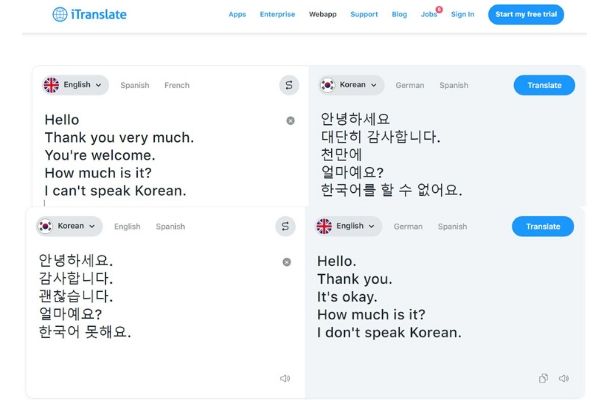
In this article, we’ll take a look at the core difference between translation and transliteration, explore real-world use cases, discuss how to avoid common pitfalls, and share a practical decision chart to help you choose which one to use. Let’s cut through the confusion and clarify exactly what the difference is between translation and transliteration.

Translation is the art of converting meaning from one language to another. It involves interpreting context, intent, tone, and cultural nuance in the source language and recreating that message in the target one.
Unsuccessful translation can lead to misunderstandings in the best case scenario, and damage brand reputation in the worst. On the other hand, thoughtful translations help global brands build trust and appeal, allow asylum seekers to seek refuge in other countries, and facilitate multilingual communication in today’s globalized world.
Transliteration is a subset of translation focused on accessibility and representation. It maps characters across different writing systems, also known as scripts, to guide pronunciation.
Transliteration understands that there are over two hundred different writing systems used around the world. In English, we use the Latin script, which is also employed by German, Spanish, French, and other Romance languages around Western and Central Europe.
On the other hand, Greek, Russian, Arabic, and Japanese are just a few of the hundreds of different scripts used in other parts of the world. Each of these languages has their own symbols and pronunciation systems to communicate.
Transliteration takes those symbols and converts them into the target script to facilitate their pronunciation by foreigners who do not know how to read the original language.
Here are some examples:
Transliteration often appears in proper names, technical terms, or cultural references, like movie titles or person names, that can’t or shouldn’t be translated.
Difference between Translation and Transliteration
When to Use Translation vs. Transliteration
Based on the differences noted above, let’s take a look at how to decide whether to use translation, transliteration, or a combination of the two:
How to Decide: Translation vs. Transliteration Flowchart
Is it a proper noun or brand name?
Pro tip: In footnotes, make sure to clearly mark your explanations. For example: *Translated/transliterated content appears in [ ].
Why Use Translation over Transliteration?
Translation helps ensure your message is clearly understood and culturally relevant, especially when the target language shares the same alphabet.
Why Use Transliteration over Translation?
Transliteration is the better choice when it’s important to retain original pronunciation or protect brand identity.
Pro tip: Provide both transliteration and translation where clarity matters. E.g., ?? (Ky?to) for the city of Kyoto, Japan.
Real-Life Examples Across Languages
To better understand the practical use of translation vs. transliteration, it helps to look at how real brands, places, and pop culture adapt their names or messages across languages. The following five examples highlight how each approach serves a different purpose depending on the context, whether it’s preserving pronunciation, adapting cultural meaning, or both.
1. Netflix’s “Stranger Things”
The Japanese energy drink brand ZONe uses a combination of translated, transliterated and English script for its Stranger Things-themed beverage © ZONe
Why it matters: Media titles often balance brand identity and local familiarity. When meaning is too abstract or doesn’t resonate, transliteration keeps the name intact while letting viewers pronounce it locally.
2. Pepsi’s Marketing in China
Pepsi has learned its lesson and updated its marketing strategy using localized techniques that combine translation, transliteration, and English script © Pepsi
Why it matters: This shows the risk of poor translation and the value of culturally-sensitive transliteration in brand naming.
3. McDonald’s “Big Mac”
Trademarked English names for McDonald’s hamburgers have already been incorporated into the vocabulary of French fast food diners © McDonald’s France
Why it matters: This is a good example of using translation for descriptions and creative transliteration for branded terms, showing a hybrid localization strategy. For a deep-dive into the cultural and linguistic considerations of McDonald’s expansion into France, check out this thesis.
Pokemon Instagram ads in
|



