|
Enter your information and get a free checklist of the top questions to answer and tips to plan a successful asset tagging project for any warehouse management system implementation. Visit for more information ordered barcode labels
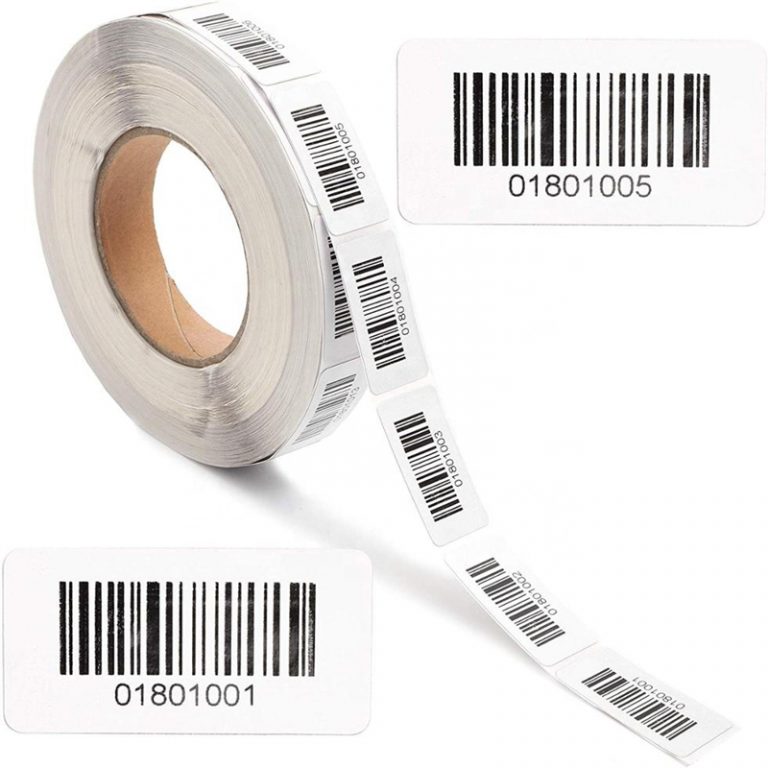
You can invest a lot of money in the design of your warehouse, but if you skip the fundamentals of organization, you risk delays and higher costs. Labeling is one prime example.
When you install warehouse rack labels strategically, you experience a host of benefits, such as improved supply chain efficiency, product visibility in the warehouse, increased productivity, and perhaps most importantly, fewer errors.
However, it’s difficult to reap the rewards of organization if you don’t understand labeling best practices, and while warehouse rack labeling is a relatively straightforward process, it’s crucial to your long-term success.
Consult this guide to learn how strategic labeling can improve warehouse efficiency, and the best practices to follow when overhauling your labeling processes.
It’s predicted there will be 180,000 warehouses worldwide by 2025, thanks largely to the eCommerce boom. Regardless of your target customer, it’s crucial for warehouses of all sizes and in all industries to maximize their real estate.
In fact, specialty warehouse space fetches the highest average rent, and making the most of existing space is a crucial resource-saving measure.
Warehouse rack labels may seem like a small detail, but they’re crucial to efficient warehouse management.
The benefits of proper labeling include:
As your business grows and your inventory changes, having a flexible labeling system makes adjustments simple. You can update or replace labels as needed to accommodate new inventory, restructure aisles, and more.
Every warehouse benefits from better rack labeling procedures, regardless of size. Organizations that invest in — and maintain — proper labeling practices have a sizeable advantage over the competition in terms of efficiency, costs, and productivity.
Every warehouse is different. Regardless of the racking solution you use, your team must agree on a rack labeling strategy and apply it to the entire warehouse.
No matter what your organizational scheme, the first step in proper labeling is a simple one: identifying your racks. It may seem like common sense, but it’s possible to overlook crucial areas, especially in large or multi-facility setups.
Racks, also known as units or sections, are the shelving units that store inventory or equipment. Depending on the nature of the warehouse, a rack might be composed of one very lengthy unit that stretches from one side of the aisle.
With that said, some warehouse operations organize their shelving units into smaller sections. This practice is more common for organizations with many SKUs, or if there are significant product size and quality variations.
If the latter sounds like your operation’s model, assign unique identification attributes to each section of each rack, not the entire racking unit itself.
Assess your current picking techniques to determine whether a standard or serpentine labeling model will best fit your operation:
It’s best to choose the method before numbering racks. This allows you to lay out all the racks intuitively based on how employees move through the facility.
Smaller, less complex warehouses can often use a standard method without any issues. However, serpentine is likely the best choice if you plan to scale up your business or products within the next five years.
Digital solutions like warehouse management systems (WMS) are crucial to warehouse organization and efficiency. Following a set organizational system for rack labeling matters, but even then, your WMS needs to work well with your organizational system.
If you don’t already have a WMS, now is the time to integrate one into your warehouse. Not only will a WMS automate workflows, pick the best picking routes, and pinpoint errors early on, but it will also allow you to add advanced technologies to your warehouse.
Embrace QR codes and RFID or NFC tags to remove manual effort, improve accuracy, and free your employees to focus on more value-added tasks. It’s no wonder that 83% of warehouses already have a WMS in place.
After you decide on a labeling and organizational strategy, it’s time to select the best warehouse rack labels for your business.
When selecting labels for your warehouse, consider the environment of your operation. What’s the facility’s temperature? Are your racks ever exposed to chemical products or moisture? Does your racking system move in such a way that its labels might experience added force or pressure?
It’s also important to consider how you will fasten these labels to your racks. In some warehouses, mechanical fasteners like screws are the best option. They’re sturdy and generally easy to remove.
However, if your racks don’t allow mechanical fasteners, you’ll need to use adhesive to bond the labels. Ensure you choose an adhesive rated to your warehouse’s temperature, moisture, and chemical exposure to prevent the labels from prematurely detaching.
At Camcode, we provide rack labels for all applications, environments, and price points. Polyester Warehouse Rack Labels are a great choice for a more durable alternative to paper-based labels. These specialized labels serve as highly durable, permanent labeling solutions that adhere to various surfaces, including uneven or bumpy surfaces.
If you need a labeling system that does many jobs at once, consider Multi-Level Warehouse Rack Labels, color-coded labels set at ideal scanning levels to minimize errors.
Of course, some warehouse applications aren’t well-suited for permanent labeling solutions. For example, reusable Magnetic Warehouse Rack Labels are a good choice if your warehouse uses temporary picking protocols with transitional racks.
No matter the size or scope of your operation, devising a warehouse rack labeling plan is a key warehousing best practice. Always take a holistic assessment of your warehouse’s infrastructure, organizational plan, and picking procedures before purchasing labels.
This strategic approach will not only save money in the long term, but also reduce miscommunications caused by illegible labels.
This practice is especially relevant to those working with a high-density racking solution that contains multiple levels. Label your racks from the ground up by giving the lowest row the name of ‘01’. The second row will be labeled ‘02,’ and so on.
Even if you don’t have enough levels at the moment, use a double-digit (or even triple-digit) model to give your system room to grow in the future. With this approach, you can name more levels without making numerical changes if you decide to scale up.
Safety is always a priority, including during warehouse rack labeling. Beyond organizing inventory, labels are essential for marking hazard zones, providing handling instructions, and displaying load capacities on racks.
While rack labels are crucial for organizing a warehouse, they work even better when combined with other labels. These additions transform your warehouse operations by improving workflow, boosting
|



